

Fabrics & Materials
Four-Layer Cushion Material Architecture
Seat and lumbar cushions produced by Elion Medlink (Hefei) Medical Technology Co., Ltd. combine four functional material layers matched to seated load, microclimate heat transfer, and surface disinfection conditions:
▪ Outer Skin-Contact Textile:
Open-pore warp knits, four-way stretch medical jerseys, high-twist cationic weaves, or CNC-perforated microfiber PU leathers selected by surface friction, elongation, and ventilation requirements.
▪ Intermediate Barrier or Airflow Layer:
Monolithic thermoplastic polyurethane (TPU) films blocking fluid ingress on clinical rehabilitation models, or reticulated open-cell filter media diffusing positive-pressure airflow on active ventilated models.
▪ Pressure-Redistribution Core:
Molded viscoelastic memory foams, high-resilience (HR) polyurethane foams, thermoplastic elastomer (TPE) honeycomb grids, or rigid polymer air plenums controlling pelvic immersion and bony-prominence unloading.
▪ Underside Stabilizing Base:
Silicone-dotted woven polyester preventing forward cushion displacement on leather, polymer, and fabric seating surfaces.
Outer Cover & Underside Textiles
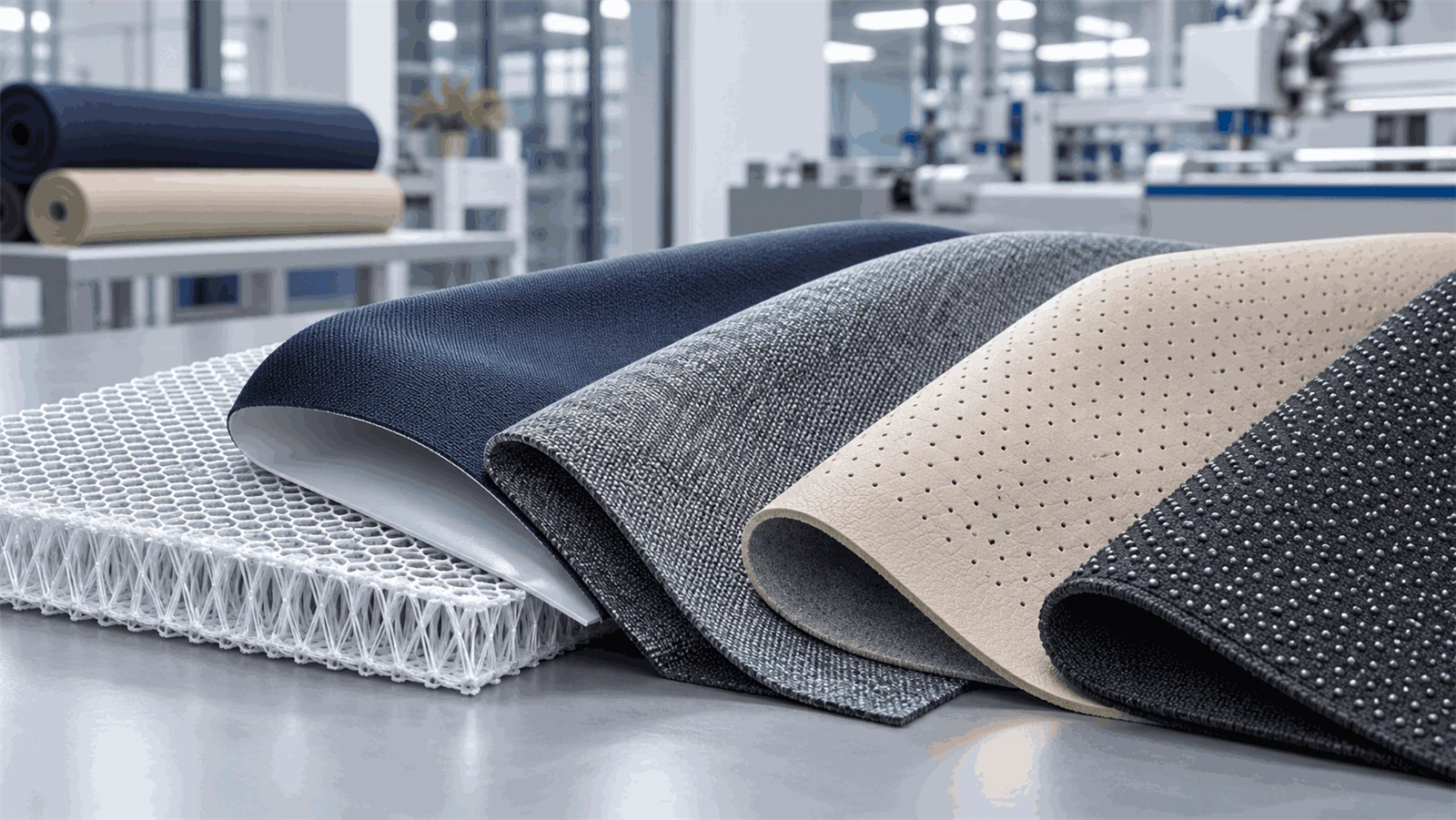
▪ 3D Monofilament Spacer Mesh (Ventilated Cooling Cushions): Double-needle-bar warp-knitted 100% polyester with dual hexagonal-mesh faces joined by 0.12 mm vertical polyester monofilament X-pile columns. Under a 75 kg seated load (approx. 7.5 kPa contact pressure), the monofilament truss retains ≥ 80% of its unloaded height to keep lateral and vertical exhaust paths open.
▪ TPU-Laminated 4-Way Stretch Medical Jersey (Fluid-Proof Rehabilitation & Hemorrhoid Models): Configured for incontinence and post-operative fluid-barrier models (dry-use hemorrhoid cushions pair with unlaminated stretch knit or spacer mesh). An 88% polyester / 12% elastane interlock knit face is thermally laminated to a 0.025 mm monolithic TPU film; ≥ 110% bidirectional elongation (ISO 14704-1 at 30 N) recesses into center apertures, coccyx cutouts, and perineal channels without bridging, withstanding 200 wipe cycles of 70% isopropyl alcohol or 1,000 ppm quaternary ammonium solution without delamination.
Outer Cover & Underside Textiles
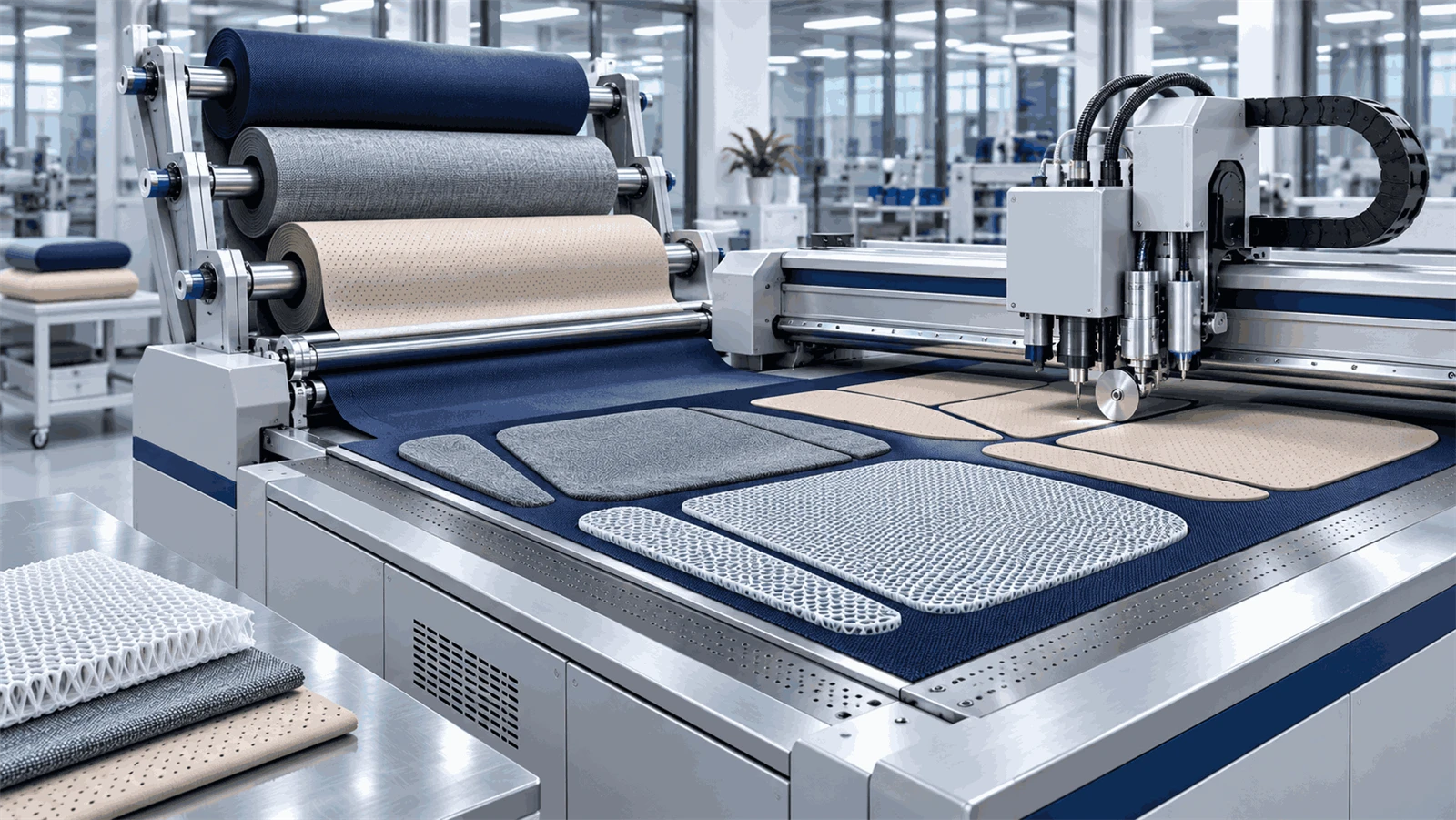
High-Twist Cationic Woven Polyester (Electric Massage Cushions): Woven from 300D × 300D cationic-dyeable polyester yarns backed with an 80 g/m² needle-punched non-woven scrim across roller travel paths to disperse localized yarn fatigue over reciprocating kneading nodes and 40–50 °C heating zones.
▪ Perforated Solvent-Free Microfiber PU Leather (Vehicle Ventilated & Smart Lumbar Cushions): DMF-free polyurethane coated over a polyamide/polyurethane microfiber non-woven base and CNC-perforated across ventilation and bolster zones. Resists 336 h hydrolysis aging at 70 °C / 95% RH (ISO 1419) and ≥ 30,000 flex cycles at -10 °C (ISO 5402-1) in vehicle cabins.
|
Textile |
Weight & Gauge |
Airflow / Barrier / Grip |
Abrasion / Tear |
|
3D Spacer Mesh |
300–340 g/m², 3.5–5.0 mm |
≥ 1,850 mm/s (ISO 9237) |
≥ 35,000 cycles (ISO 12947-2) |
|
TPU Medical Jersey |
200–230 g/m², 0.55–0.65 mm |
≥ 3,500 mmH₂O (ISO 811) |
≥ 25,000 cycles (ISO 12947-2) |
|
Cationic Woven PES |
280–310 g/m², 0.75–0.90 mm |
Grade 4–5 pilling (ISO 12945-2) |
≥ 50,000 cycles (ISO 12947-2) |
|
Perforated Microfiber PU |
480–540 g/m², 1.0–1.2 mm |
1.2 mm holes, 5.0 mm pitch |
≥ 45 N tear (ISO 3377-1) |
|
Silicone-Dot 600D Oxford |
250–280 g/m², 0.50–0.60 mm |
μs ≥ 0.68 grip (ASTM D1894) |
≥ 40,000 cycles (ISO 12947-2) |
Material Safety, Colorfastness
▪ Skin-Contact Biocompatibility (Configured for Medical-Channel Orders): For clinical and rehabilitation distribution orders, cover textiles can be specified from certified lots tested to ISO 10993-5 (in vitro cytotoxicity Grade 0–1 on L929 extract test) and ISO 10993-10 (Primary Irritation Index ≤ 0.4; negative delayed-type skin sensitization), supplied with lot-matched third-party test reports.
▪ Restricted Chemical Substances: Export cover textiles and foam cores are sourced within EU REACH (EC) No 1907/2006 SVHC limits (< 0.1% w/w). Certified OEKO-TEX Standard 100 Product Class II textile lots (< 75 mg/kg formaldehyde, extractable heavy metals, and banned azo colorants) can be designated per direct-skin-contact specification.
Flammability Standards
▪ Colorfastness & Laundering Stability: Dyed cover textiles achieve ≥ Grade 4 color change and staining in acidic (pH 5.5) and alkaline (pH 8.0) perspiration tests (ISO 105-E04), plus ≥ Grade 4 dry crocking and ≥ Grade 3–4 wet crocking (ISO 105-X12). Removable covers maintain warp and weft dimensional change within ± 3.0% after 5 machine wash cycles at 40 °C with line drying (ISO 6330).
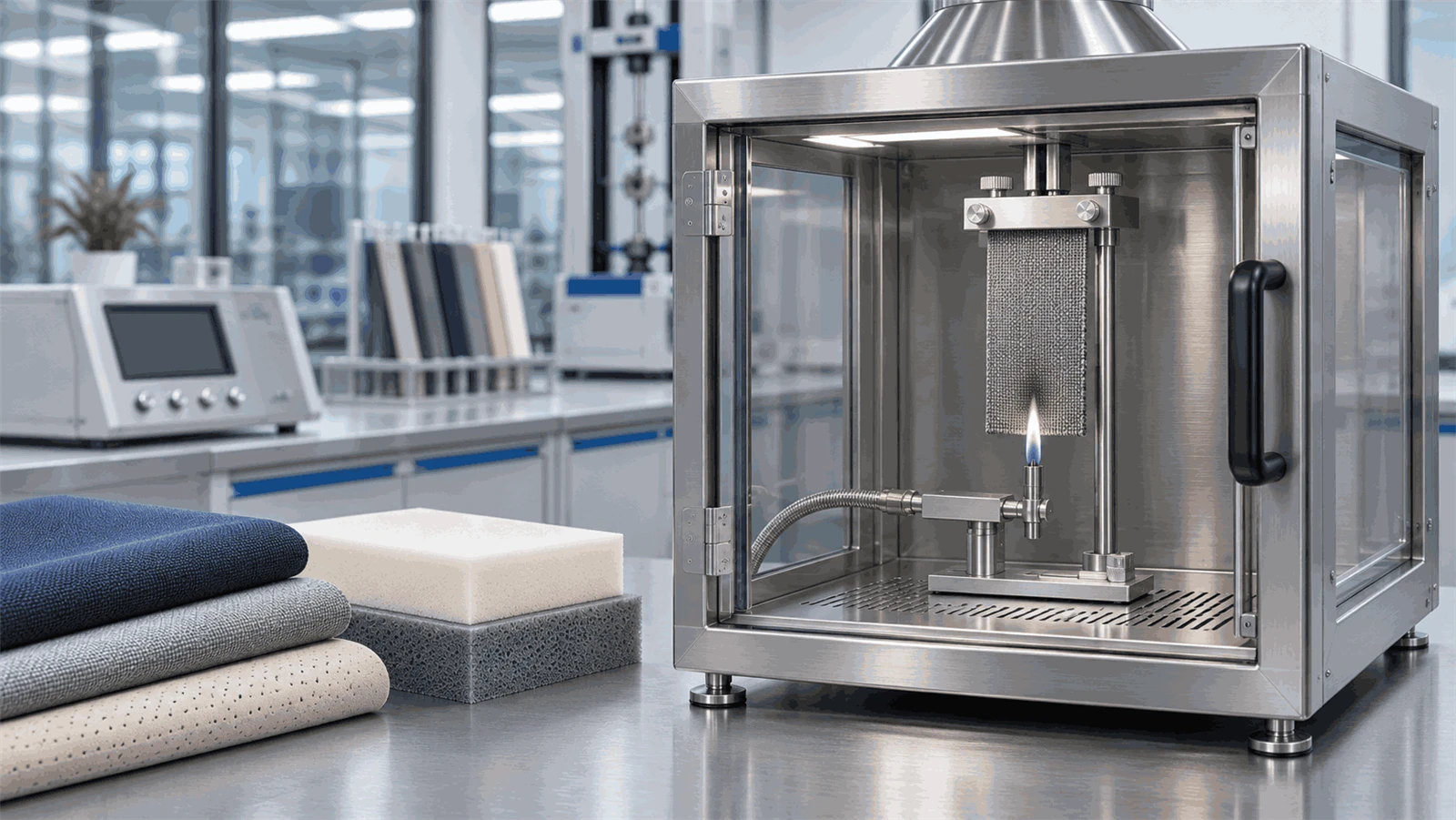
▪ Destination-Market Flammability Options: Foam cores and outer covers can be configured per purchase order to meet US CAL TB 117-2013 smolder criteria (≤ 45 mm char length, halogen-free), UK/EU institutional standards BS 5852 (Source 0/1) and EN 1021-1/-2 (FR back-coated textile paired with CMHR foam), and automotive interior burn rate limits under FMVSS 302 / ISO 3795 (≤ 100 mm/min).
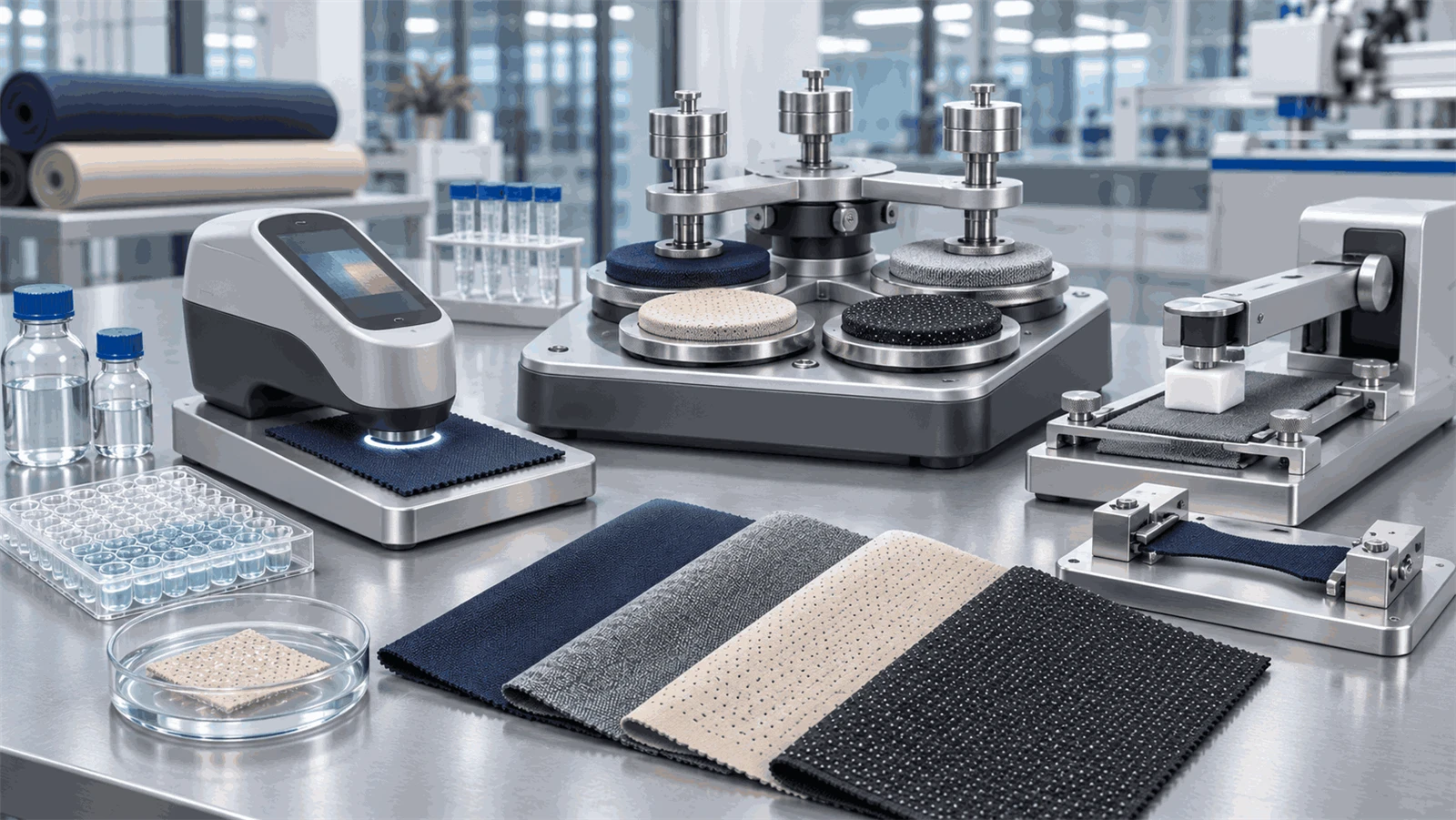
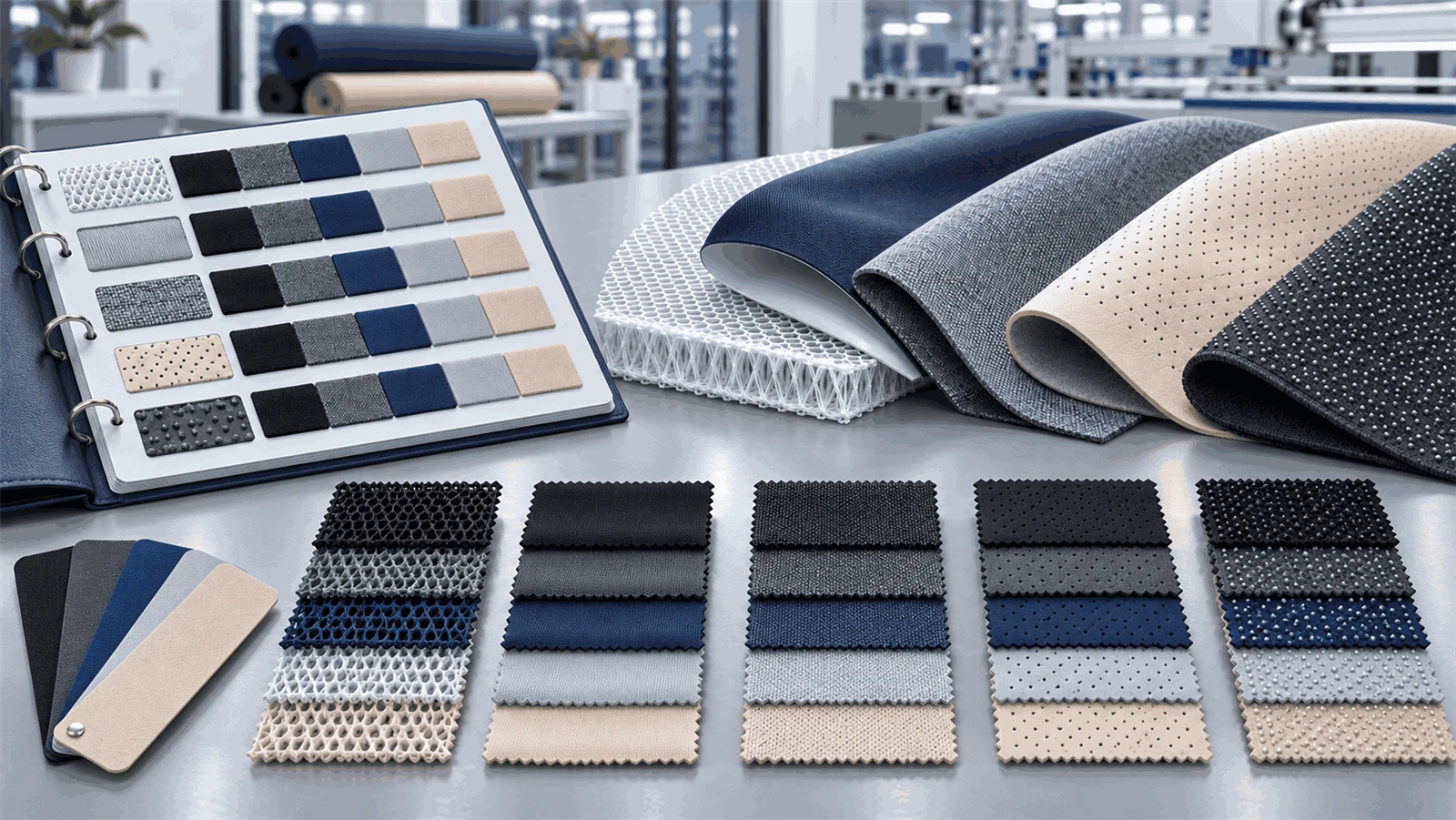
▪ Stock Roll Colorways: Black, Charcoal Grey, Navy Blue, Medical Light Grey, and Automotive Beige are maintained across standard 3D spacer meshes, stretch medical jerseys, cationic woven polyesters, and perforated microfiber PU leathers.
▪ Lab-Dip Shade Matching & Functional Finishes: Custom dyeing to Pantone TCX/TPX references or physical master swatches is controlled within ΔE (CMC 2:1) ≤ 1.0 under calibrated D65 (6500K) and TL84 (4000K) illuminants for volume mill dye-lot programs. Optional mill-applied finishes include silver-ion antimicrobial treatment (ISO 20743, ≥ 99.0% reduction against S. aureus and K. pneumoniae) and C0 PFAS-free water/stain repellent (ISO 4920 Spray Rating ≥ 4).